
September’s Lifeskill at SBG Bend is Adaptability.
Spend enough time on the mat and you become familiar with the distance between what you expected and what actually happened. You thought you had the position. Your partner found space. You thought you understood the escape. A little different pressure revealed there was more to learn.
Those moments invite us to change more than a grip or an angle. We can change our understanding. That is where adaptability becomes a philosophy for living: remain open to experience, examine your assumptions, and let what you learn influence what you do next.
Truth requires a willingness to change
SBG places Truth, Aliveness, and Adaptability at the center of its philosophy. We examine what works, test our understanding through live practice, and develop skills that remain useful as circumstances change. SBG also calls for openness to revising our beliefs as our understanding develops. SBG Philosophy
That asks something demanding of us: let the evidence matter enough to influence our behavior.
Learning feels comfortable when it confirms what we already think. The more revealing moment comes when something we have defended, practiced, or taught needs to change. We can investigate that discovery and revise our view when there is good reason.
The mat provides frequent opportunities. It has remarkably little interest in how long you have been explaining that your guard is difficult to pass.
Learning from what happens
Matt Thornton describes Aliveness through timing, energy, and motion. A partner moves, resists, and responds, giving us feedback we have to account for. Progressive resistance creates room to learn through that interaction. Why Aliveness
We attempt something, encounter a response, and notice what we overlooked. One failed attempt raises questions about execution and conditions. One success raises questions about whether we can repeat it. Understanding develops as we keep practicing and asking.
That process requires humility. A correction can feel like a judgment, especially when we care about doing well. We can be proud of our progress and still recognize a weakness. There is freedom in saying, “I hadn’t considered that,” and meaning it. Curiosity gives us somewhere to go with feedback.
Fundamentals make adaptability possible
SBG’s emphasis on fundamentals gives adaptability a foundation. As we explore in Fundamentals in BJJ: What They Really Mean, these are the essential principles and skills that make techniques work. Students at every level keep refining them, developing greater precision and a deeper understanding of why they work.
Matt Thornton offers a concrete example in A Fundamental Is What Is Most Important: John Frankl teaching the underhook through different applications. Each application becomes a way to investigate the mechanics that make the movement effective.
As a partner changes position, we adjust how we establish and use that underhook. Understanding the mechanics helps us recognize what is available and choose a response. Through drilling and live practice, we learn to apply the same fundamentals under changing circumstances. That is how deeper understanding creates room for adaptability.
Good coaching keeps learning open
SBG’s I-Method gives learning a practical structure: Introduction, Isolation, and Integration. Students establish an initial understanding, develop it through focused live drilling with progressive resistance, and bring it into the larger game. Each stage creates opportunities to discover what they understand and return with better questions. Notes on Drilling
Coaches participate in that process too. Matt describes learning details from John Frankl that changed how he taught material he had been teaching for more than twenty years. Experience remained open to new understanding. Learning More About the Fundamentals
At SBG Bend, that is an example worth following. A student’s difficulty gives us something to examine in our explanation or the challenge we have set. Teaching carries a responsibility to keep learning.
Our values guide how we adapt
Adaptability benefits from knowing what matters. We can remain committed to learning while changing how we practice, or committed to honesty while finding a more considerate way to speak. Our values give us direction as our approach develops.
Respect in training may mean increasing the challenge for one partner and slowing down for another. With either person, it includes listening to their boundaries. As we explored in Kindness, care and control help give each person a productive training experience.
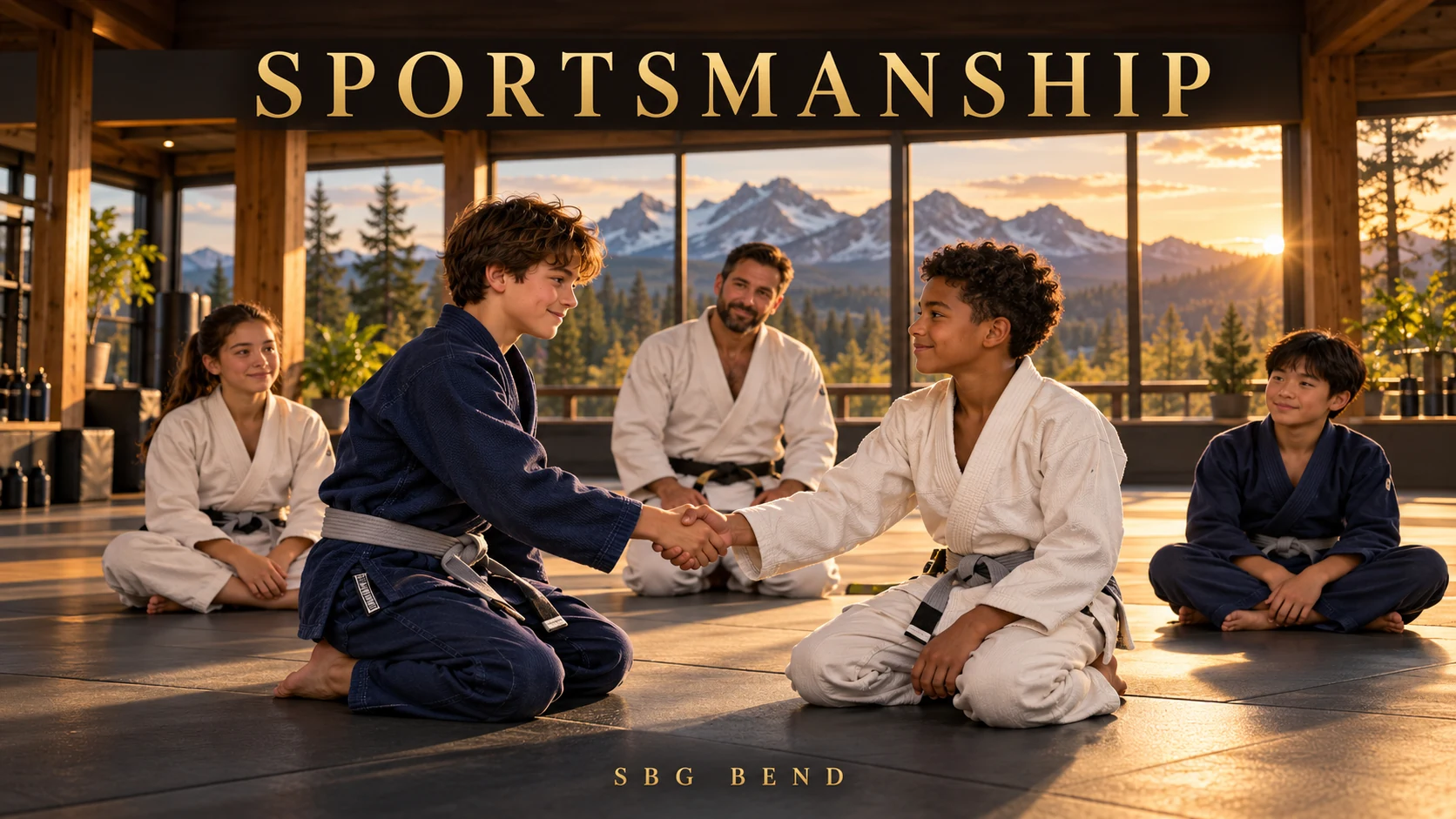
Openness is easier in a room where mistakes can be acknowledged without humiliation. Every coach and partner helps create that environment. We can challenge one another sincerely while caring about each other’s progress.
One Tribe One Vibe carries that responsibility. Belonging gives us a place to ask questions, admit confusion, and keep growing.
Carrying the lesson beyond the mat
The value of this practice grows when we deliberately apply it elsewhere. In a difficult conversation, we can ask what we have misunderstood. At work, we can revisit a plan when its assumptions change. As parents, we can recognize when a child needs a different kind of support.
We may feel disappointed, embarrassed, or uncertain while choosing a thoughtful response. Adaptability gives those feelings room without requiring them to decide our next action.
This also deepens Perseverance: continuing to learn may require us to change how we continue.
For September, bring a little more curiosity to the moments when experience surprises you. Ask what you can learn. Let the answer influence your next attempt. Confidence can grow around that ability to respond.
This is SBG. You’ll be OK.